Back to Blog
Automation Strategy
The 3-Step Framework to Cut Manual Work by 80%
February 17, 2026Chetan Joshi
Automation Strategy
There was a time in Investment Banking operations where my team and I were the automation.
We were human robots.
In Collateral and Margin operations, we lived inside spreadsheets, macros, rule engines, inboxes, and queues. We invested years optimising manual processes using old technology, fragile logic, and heroic effort.
At the time, it felt advanced.
In reality, it was a workaround.
We were using macros and rule-based systems to paper over structural problems that could not scale and quietly increased operational risk.
That experience is why I built and now teach a different approach.
It is called ACI. In April 2024, the Founder & CEO of intellimation.ai, Har Pulak Bahadur, taught me this three-step process, which has been engrained in me as an AI Product Director.
Automation. Control. Intelligence.
In Collateral operations, the goal was always the same.
So we:
It worked.
Until it didn't.
Every new product, counterparty, regulation, or volume spike exposed the same truth.
Rule-based automation does not scale.
It becomes brittle, opaque, and dangerous.
Traditional automation assumes the world is stable.
Banking operations are not.
Rule-based systems:
This is how operational risk creeps in quietly, hidden behind "automation".
What we needed back then was not more rules.
We needed intelligence with control.
ACI is not a consultancy slogan.
It is the framework I wish we had when we were running Collateral desks at scale.
Each layer exists because of real operational pain.
In operations, humans should not be:
That work belongs to machines.
Automation in ACI focuses on:
This is the easy part.
It is also where most firms stop.
In Collateral, not everything is an exception.
It just looks that way when systems are dumb.
Control is where ACI changes the game.
Instead of reviewing everything, we ask:
What genuinely requires human judgement?
Control is designed through:
This creates queues with intent, not panic.
This is the step we never had in legacy operations.
Using RHLF – Reinforced Human Learning Feedback, Vertical AI operates with two queues.
Queue 1: Fully Automated Flow
Clean data. High confidence. Zero human touch.
Queue 2: True Exceptions Only
Ambiguous cases routed to humans for validation.
Here is the difference.
Every human decision trains the AI.
Not next year.
Not in the next project.
Immediately.
In old operations:
With ACI and RHLF:
This is how you cut manual work by up to 80% without increasing exposure.
Macros do not learn.
Rules do not adapt.
Spreadsheets do not scale.
They lock knowledge into brittle logic and force humans to compensate.
Vertical AI does the opposite.
That is the difference between automation theatre and operational leverage.
ACI thrives where I spent most of my career:
This is not generic AI territory.
This is Vertical AI, designed for real operations.
We spent years turning people into machines because the technology could not think.
Now the technology can learn.
When Automation removes the grind,
Control protects the firm,
and Intelligence learns from human judgement,
operations stop being a cost centre and become a strategic asset.
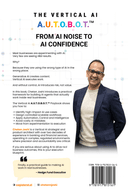
This is why ACI sits at the core of The Vertical AI A.U.T.O.B.O.T™ Playbook.
If you want to explore how ACI and RHLF queue-based processing could be applied to your organisation, you can book a free Vertical AI Discovery Call.
We will identify where humans are still acting like robots, where old automation is creating risk, and how to move to intelligence that scales safely.
This is how modern operations are rebuilt at coglateral.ai.
© 2026 coglateral.ai. All rights reserved.


.png&w=640&q=75)